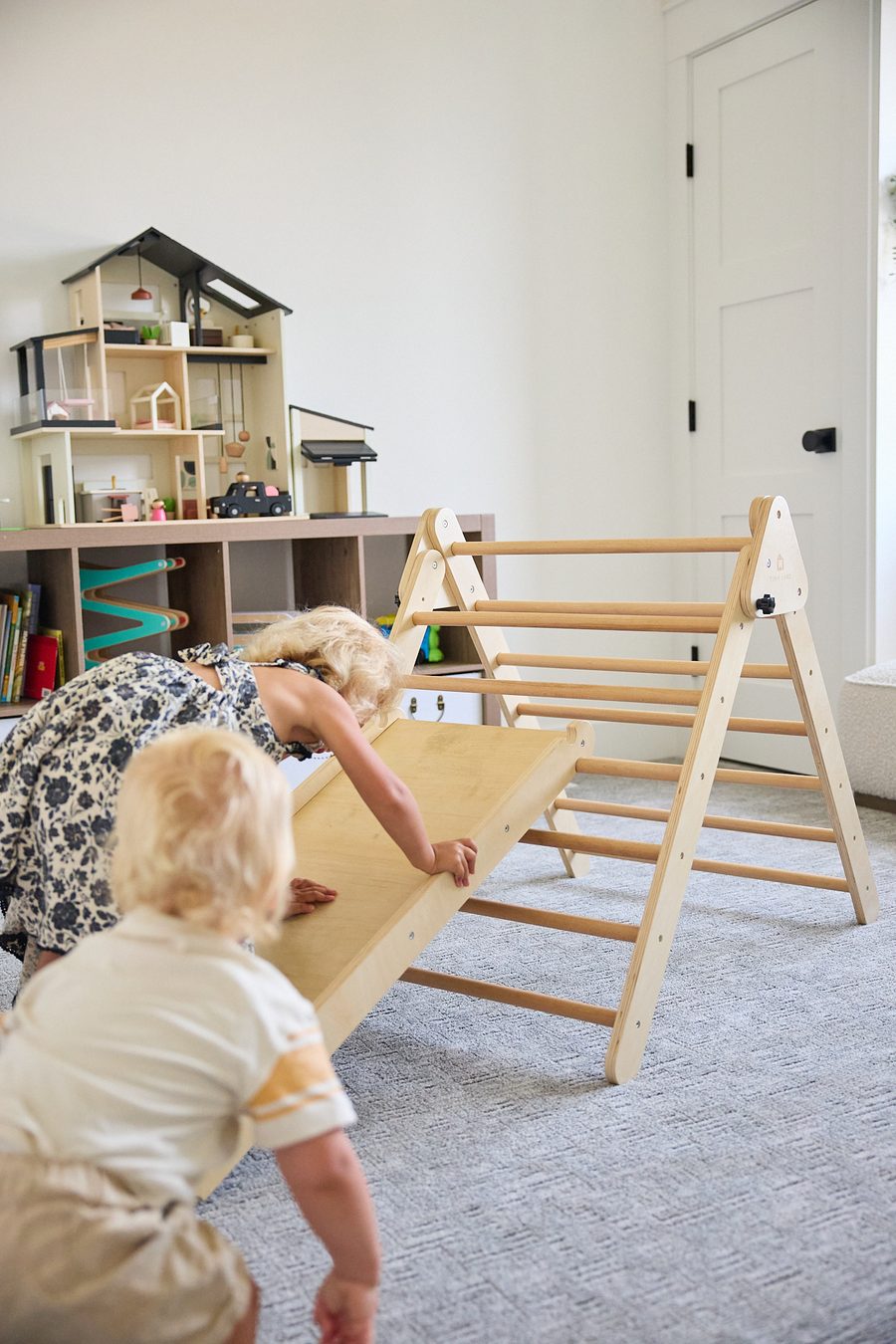
We don’t have a playroom. Not a real one, anyway — no extra bedroom converted into a kid wonderland, no basement rec room lined with shelves. What we have is a living room, and a handful of pieces that fold away, stack up, or just quietly belong there, that Emery and Ellison end up playing with more than almost anything else in the house.
I think that’s actually the more useful version of this to write about. Most of what shows up when you search “Montessori playroom” assumes you’ve got a whole room to dedicate to it. We don’t, and I’d guess most people reading this don’t either. So here’s what it actually looks like for us — three pieces, all living in our main space, all getting used daily, none of them requiring a room of their own.
The Pikler Triangle Is the One They Never Get Tired Of
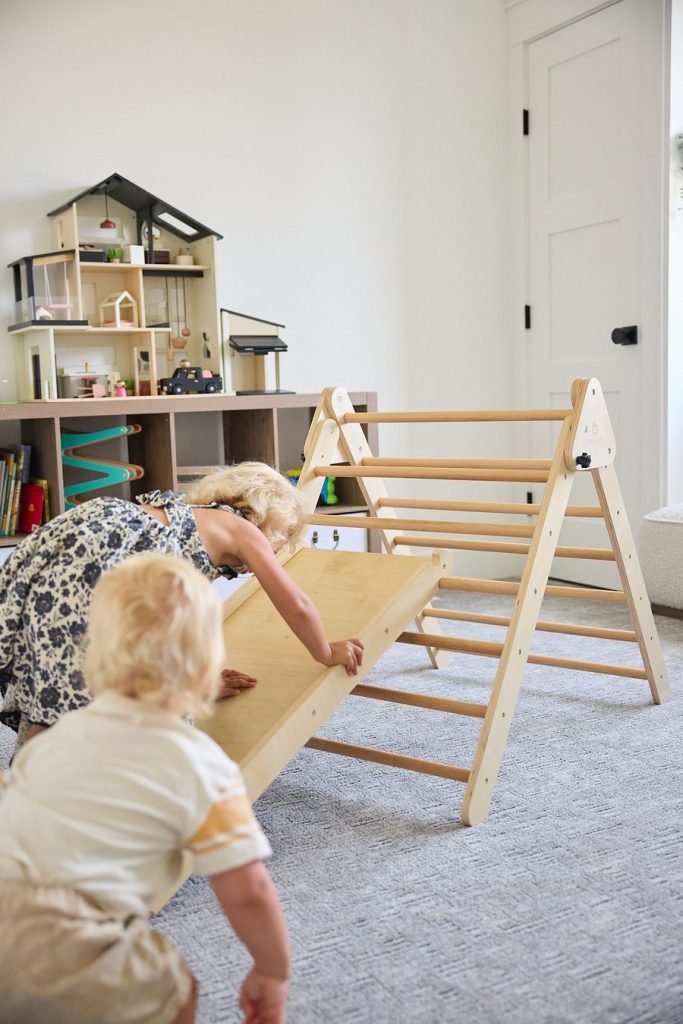
This was the first piece we brought in, and it’s still the one that gets used every single day, by both kids. It’s a 7-in-1 climbing set with a slide attachment — Emery treats it like her own personal gym, and Ellison, who’s not even a year and a half yet, is already climbing it with her. It folds down when we need the floor space back, but honestly most days we just leave it out, because it gets used that often.
What sold me on it wasn’t the Montessori branding — it was watching how much gross motor energy it burns off without a screen anywhere in sight. Climbing, sliding, figuring out how to get down instead of just up. It’s the closest thing we have to a playground inside our living room.
Stepping Stones Turned the Floor Into an Obstacle Course
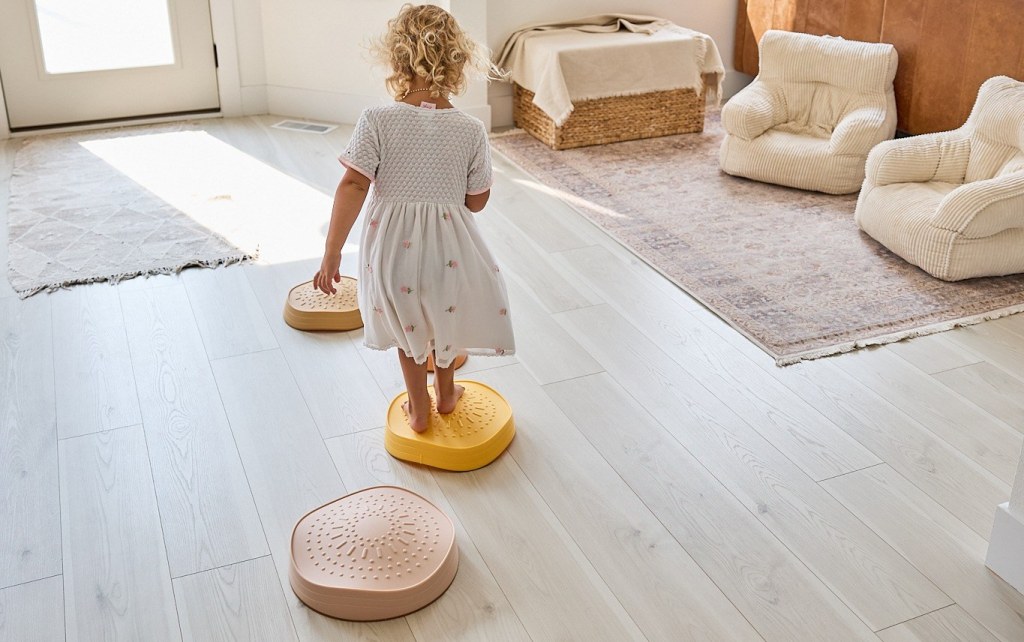
These were a smaller investment, and I underestimated how much they’d get used. They’re simple, non-slip balance stones — you lay them out across the floor and suddenly you’ve got a made-up obstacle course. Emery will rearrange them herself now, which is exactly the kind of open-ended play we’re going for — we’re not telling her how to play with them, she’s deciding that part.
The small-space case for these specifically is strong: they take up zero floor space when they’re not out, they don’t need a corner or a shelf, and they turn back into “just the living room” the second playtime’s over. For balance and gross motor work, they punch well above what you’d expect from something this simple.
The Dollhouse That Doesn’t Look Like a Kid’s Toy
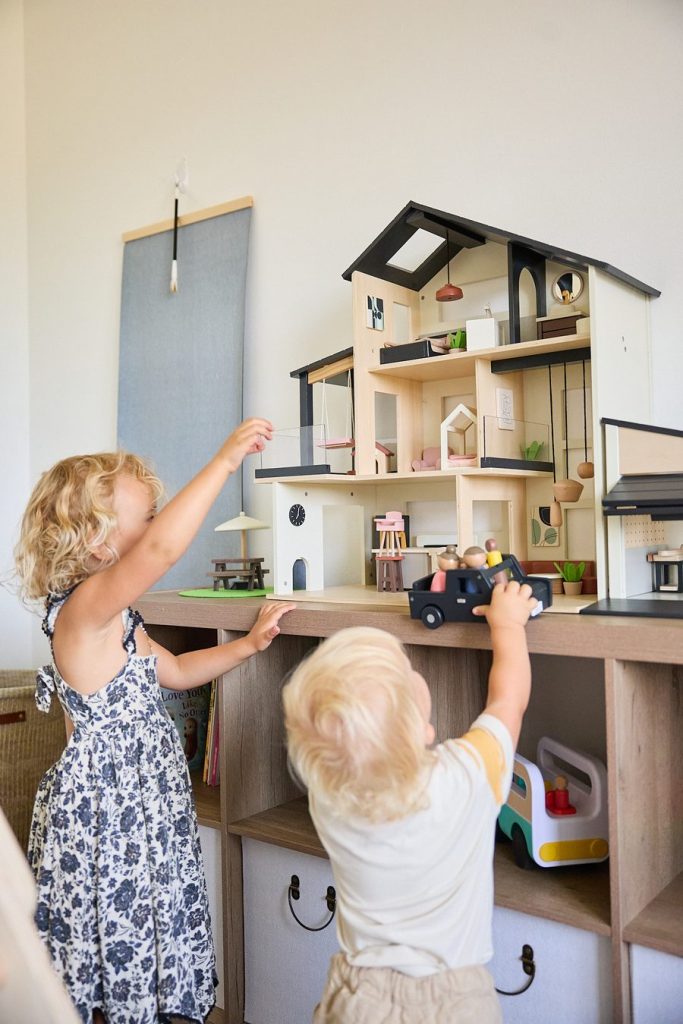
This one surprised me. It’s a modern, gender-neutral wooden dollhouse — three stories, seven rooms, over fifty little pieces of furniture — and it’s become one of the only toys both kids will sit and play with together instead of separately. Emery does the imaginative-play side of it, moving furniture around and inventing whatever story she’s on that day, and Ellison mostly just wants to hand her things and watch.
The part I didn’t expect: it actually looks good in our living room. It’s not brightly colored plastic that fights with the rest of the room — it’s wood tones and clean lines, and it sits on a shelf like it belongs there, not like something we’re constantly trying to hide before someone comes over.
Why This Works Without a Dedicated Room
If there’s a theme across all three of these, it’s that none of them ask us to build a separate kid space to make them work. They fold, they tuck away, or they’re simply nice enough to look at that we don’t need to hide them. That’s the actual unlock for anyone in a smaller home, or anyone who — like us — would rather keep the whole house feeling like one calm space instead of splitting it into “the nice rooms” and “the kid room.”
Open-ended, Montessori-inspired play was never really about the room. It’s about picking pieces that hold a kid’s attention without a screen, that grow with them instead of getting outgrown in a month, and that don’t require you to hand over an entire room of your house to make it work. Three pieces, one living room, used every day — that’s genuinely the whole system.
This post contains affiliate links — if you shop through them, we may earn a small commission at no extra cost to you. Full disclosure here.
- Pikler Triangle 7-in-1 Montessori Climbing Set — $139.99
- Stepping Stones — Sunset Hues — $35.99
- Sweetwood Edge Modern Family Dollhouse — $149.99


Leave a comment